The Audience Prize

December 29, 2025

After defending my Master’s thesis before a jury at the university, I received the Best Master’s Thesis in Computer Science award. That was a nice recognition at the university level, but I also wanted to see whether my work could stand out nationally. That is why I submitted my thesis to the national ie-net master’s thesis competition, which recognizes outstanding Master’s theses in Belgium. Eligibility is limited to students in the top 20 percent of their faculty, so even being allowed to participate already felt like an achievement. In addition to submitting a thesis summary, candidates must answer a series of questions, for example about the societal relevance of their work. After that, the participants wait to hear whether they are selected as finalists. Finalists then defend their thesis before a jury with members from different backgrounds. Each finalist is also eligible for the audience prize by submitting a video of at most two minutes in which they explain their thesis to a broad audience. All videos are posted on LinkedIn, and the audience prize is awarded at the ceremony in Antwerp based on the number of likes at that time.

When I heard that I had made it to the finals, I emailed my supervisors to inform them. I mentioned the audience prize, but explained that my main goal was to place first in the jury award. A popularity contest did not feel particularly meaningful to me, especially given everything else that was going on at the time: PhD applications, a paper submission deadline, and the upcoming jury defense. I still planned to put effort into making a good video.
Chapter 1: The Green Screen Studio
After watching videos of finalists in previous years, I noticed that many opted for a "real-life" format: showing a physical prototype, testing something on people, or filming on location. That approach would not really work for me. My thesis is in computer science, and my prototype is software. I briefly considered explaining zero-knowledge proofs (the topic of my thesis) using a real-life analogy, for example a scene where I try to enter a club and prove I am old enough without showing my ID. While that can work for explaining the concept, it felt forced, and more importantly, it would not convey the core of my actual research. A real-life video was most likely not the right fit. At the same time, I also wanted to avoid a "basic" slide-based video with a voice-over. I needed something more creative.

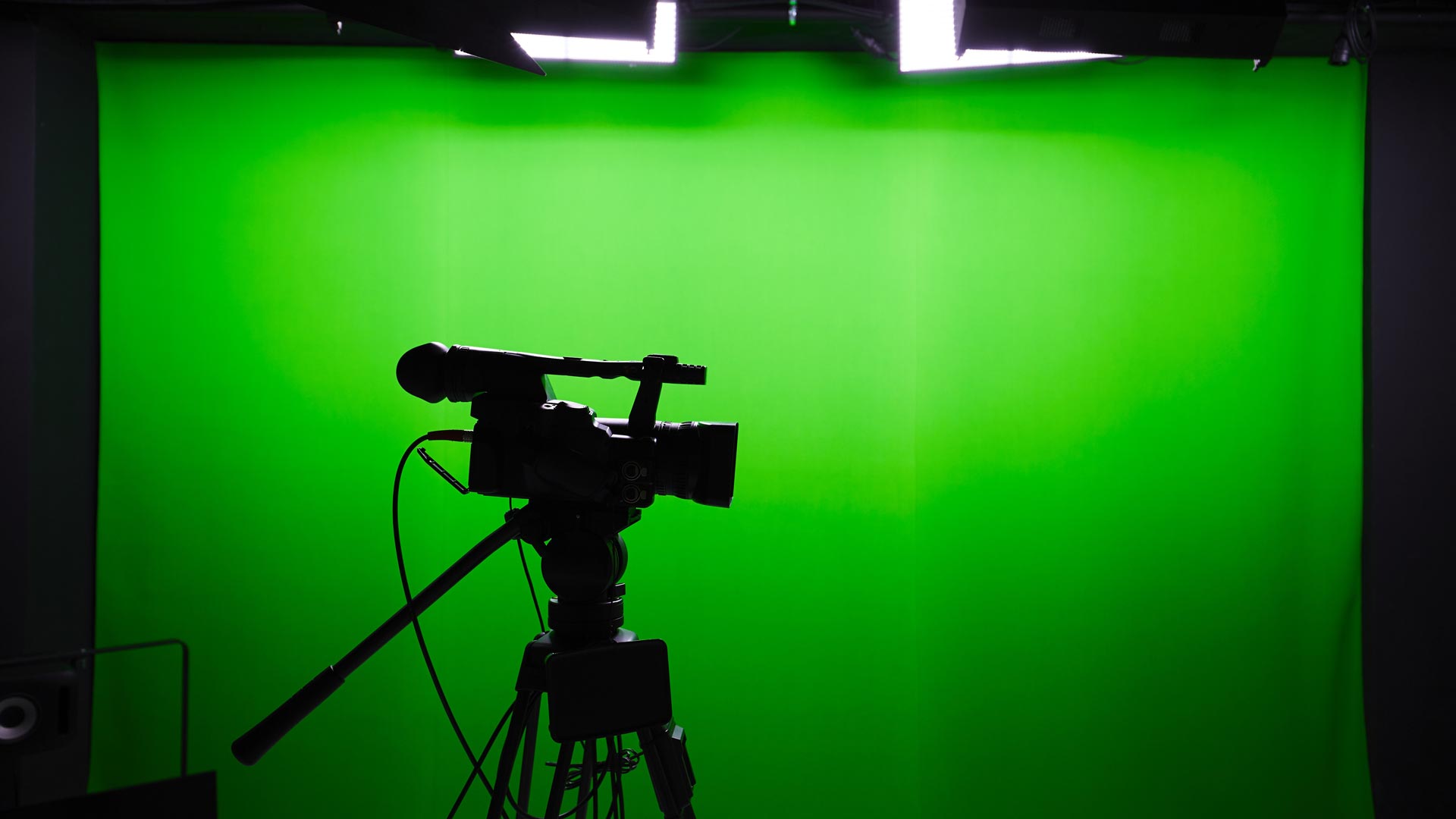
After some thinking, I concluded that a green screen recording would probably be the best option. It would allow for a professional look with creative edits, and I already had some experience with video montage. The only remaining question: where do you find a green screen studio for free? This was especially tricky because it was very last-minute. I had just returned from the United States, where I presented my thesis at the ZK Residency event organized by Self. Time was not on my side. I started calling recording studios in Belgium, pitching the same story each time: I only needed a few minutes of recording, and I would happily include their logo at the end of the video. That did not work. The request was too last-minute, and understandably, studios knew that "just a few minutes" rarely stays that way (as recording usually requires multiple takes due to various issues). Some studios were willing to help, but only at rates in the range of 100 to 200 euros, which I could not afford. That left one option: the studio of my university.

You might wonder why I did not start by contacting the university from the very beginning. I actually did. Everything related to recording unfortunately goes through a central service, and I was informed that studio reservations require at least two weeks' notice. However, during that conversation, they mentioned that the studio manager was "a Greek guy". That was just enough information to identify him online as Georgios. Given the urgency, I needed to reach him by phone. Fortunately, through Microsoft Teams, university employees' phone numbers are visible. The only problem was that my university account had been deactivated after graduation. With help from a friend who was still a student, I managed to get Georgios' number, but I could not reach him. Teams luckily also shows the organizational hierarchy. After several calls, I ended up speaking with Dries Peeters, the head of audio-visual services at the university. He told me that Georgios would be back on Friday and that I would be able to use the studio that day!
Chapter 2: The Recording
To put the timing into perspective:
  • Friday noon was the deadline for the paper submission.
  • Saturday morning was the jury defense.
  • Saturday night was the deadline for the video submission.
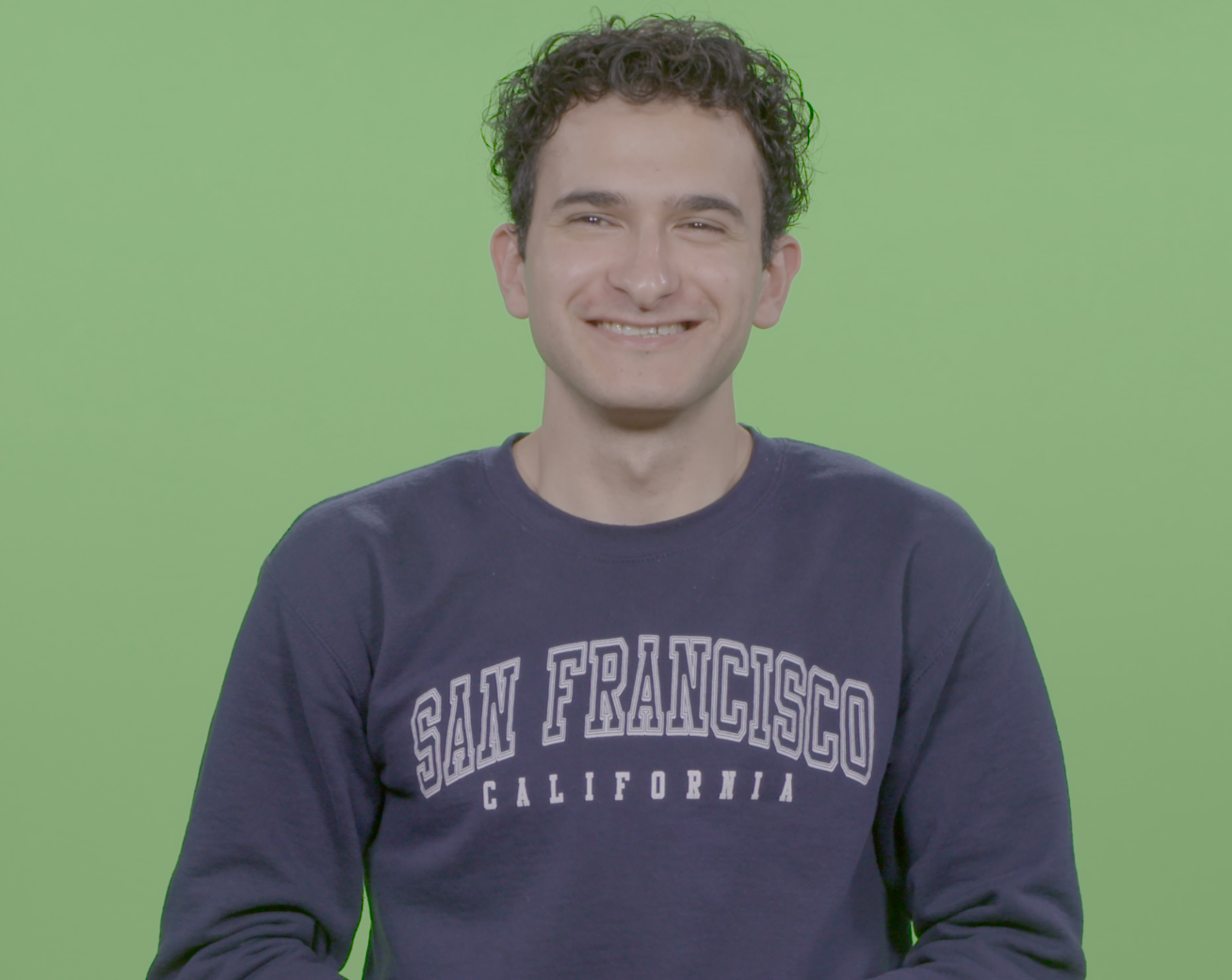
That left me roughly one day to record and edit everything. Therefore, I prepared as much as possible in advance. I wrote down my editing ideas, set up animations and transitions, and revived my old Windows machine so I could use Sony Vegas Pro, a video editor I was already quite familiar with. I did not sleep during the night from Thursday to Friday, as I was still making minor changes to the paper. I submitted it on the way to the studio the next morning. I arrived early and had to wait a bit. To make sure the recording would go smoothly, I ended up practicing in front of the bathroom mirror, until someone walked in and I made a very quick exit. We will pretend that did not happen. When I finally met Georgios, he turned out to be incredibly kind. He had even prepared a glass of water for me, and set up a teleprompter so I could read my text. The relaxed setting made things much easier, and we finished it in a single take. He normally also does the editing for "clients", but that was impossible given the timing. Still, he took care of tuning the lighting and audio, which saved me some stress. I spent the rest of Friday editing the video. Then, in the night, I kept tweaking my jury presentation until it felt perfect. I finished about an hour before the defense at 9 a.m., which made sleeping a bit pointless. It was probably the first time in my life I went two full days without sleep. The jury defense ended around 10 a.m., after which I was finally able to sleep for a few hours. In the afternoon, I returned to editing and submitted the video, which you can watch here (it contains English subtitles). I was happy with the result. In hindsight, I might have added some sound effects or refined some pronunciations, but overall, I felt it stood out once all videos were published.
Chapter 3: The End?
Earlier, I mentioned I did not want to focus on the audience prize. And that was true, until a few hours later, when I saw that I was in first place and then suddenly got dropped to second. That feeling did something to me. Someone was overtaking me, and I was doing nothing to counter it. At first, I tried to let it go. The pressure of several upcoming PhD deadlines helped pull my focus away from it as much as possible. Not long after, I discovered that some universities still required a TOEFL test, even though my Master's was fully taught in English. In Belgium, that language test costs around 300 euros. I had just graduated and had only enough savings to fund my PhD applications. The audience prize came with 250 euros and, unlike jury decisions, this one was deterministic: the video with the most likes wins. Suddenly, I had reasons to go for it.

I started with the usual promotion: sharing the video with LinkedIn connections and friends. That got me to around 200 likes, but others were already at 300. So I asked friends for help. Iliass let me do a short promotion before his volleyball match. Yoeri's girlfriend was a law student and shared the video in a WhatsApp group with hundreds of students. Jonathin, the PR person of Infogroep (the computer science student association of my university), promoted it in the CS Discord servers. I even went around campus with my friend Kaïs, asking random people whether they had LinkedIn. At that point, I had to start thinking more out of the box: where do you find people with LinkedIn profiles? A job fair seemed like the ideal place. I googled and, coincidentally, there was one the very next day (organized by the same association behind the awards :D). Kaïs joined me, and we managed to promote the video there as well. Still, it was not enough. Someone else kept a lead of about 70 likes.

My last strategic move was to ask for help from fellow Armenians. As an Armenian myself, I knew how supportive our community can be. I found large Telegram groups with tens of thousands of members, and the admins were happy to help promote the video. At one point, I even joined a group where my video had already been shared without me asking: the admins were passing it along themselves! That caused a massive boost. By the day before the award ceremony, I was more than 100 likes ahead. It seemed settled. Or so I thought...
Chapter 4: The Suspicious Spike
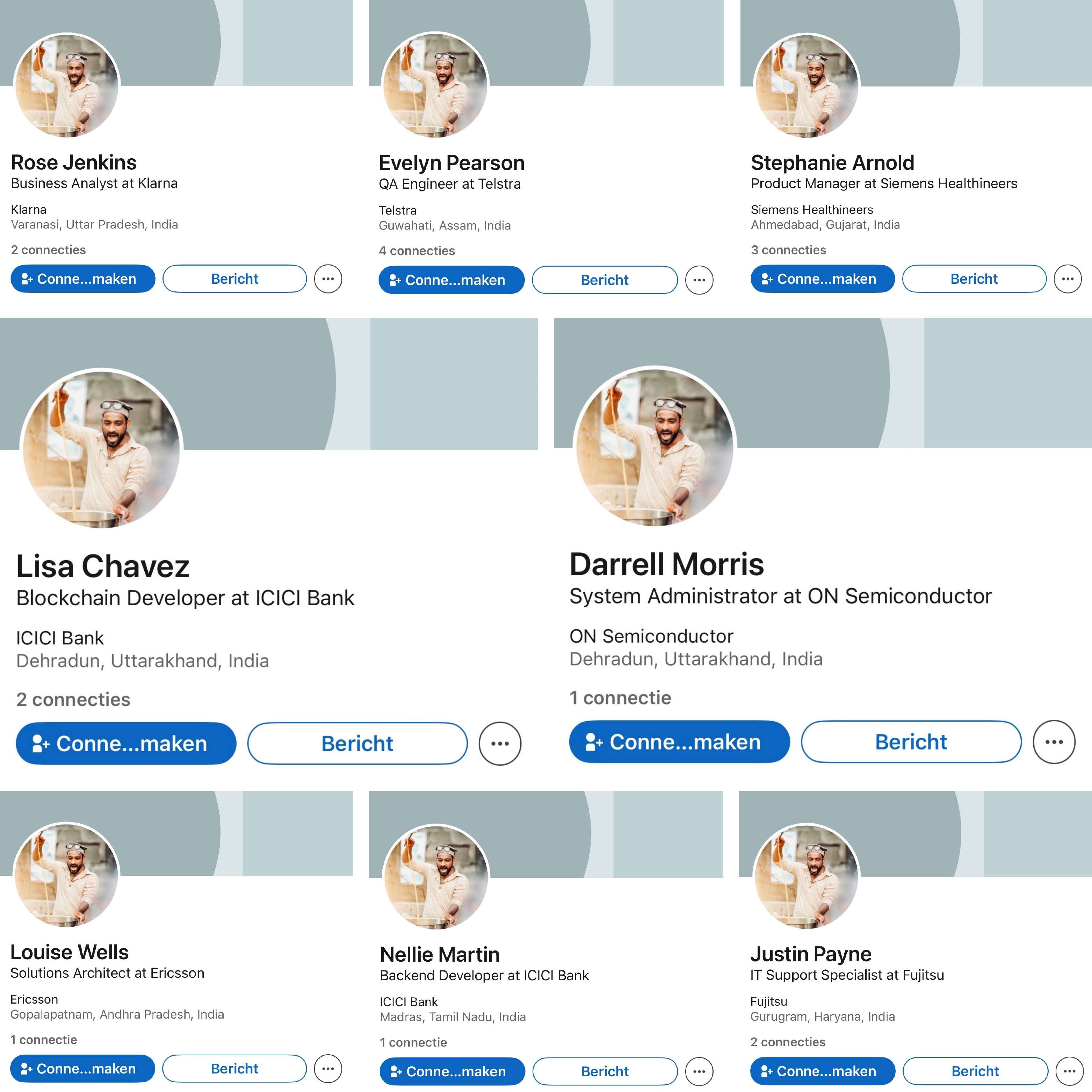
On the morning of the ceremony, I woke up to see that the second-place candidate had suddenly gained hundreds of likes overnight. Something was clearly off. A quick scroll through the likes made it clear that many were coming from suspicious accounts: profiles from India with one or two connections, supposedly working at top companies, and most of them having the same profile picture. All the effort I had put in was suddenly being wiped out by cheating, regardless of whether the candidate himself had bought the likes or someone else had done so for him. Another finalist from my university helped investigate. He found even more evidence and forwarded it to the organization. At first, I was informed on the phone that the provided evidence was sufficient and that I should not worry. They had seen how things looked the night before and now agreed that something did not add up. That was a huge relief, and I started getting ready for the ceremony.

A few hours later, however, we received an email stating that it was difficult to distinguish fake profiles from real ones, and that the contest would proceed without disqualifications. I did not see that coming and called them to understand what was going on. They told me that it was difficult to prove fake profiles on paper. While I completely understood their perspective, I could not accept losing due to cheating. After some discussion, they told me the director would like to speak with me shortly before the ceremony. That was my last shot.
Chapter 5: The Winner(s)
When I arrived with my parents in Antwerp, I flew straight to the director. She was kind and understanding. She explained that publicly announcing a disqualification without airtight proof would be very difficult. Instead, they decided to consider additional factors such as comments, views, and reposts. In the end, a compromise was reached: we would both win the audience prize and receive 250 euros. I was happy with that outcome. I spoke to the other winner before the ceremony. He also found the fake likes strange and said he had not bought them himself. He wanted the prize mainly to boost his profile for a fellowship application. At that point, what mattered to me was that my effort had not been in vain, and that fairness ultimately prevailed. I was also fortunate to be awarded first place in the jury prize category: